Pediatric dental visits can feel overwhelming for children who are anxious, sensitive to new environments, or need more involved treatment. Pediatric sedation dentistry can help create a calmer, more manageable experience while allowing the dental team to complete necessary care safely and efficiently.
Different levels of sedation may be used depending on your child’s age, medical history, anxiety level, and treatment needs. In this guide, we explain common sedation options for children, when they may be recommended, how safety is monitored, and what parents should expect before and after treatment.
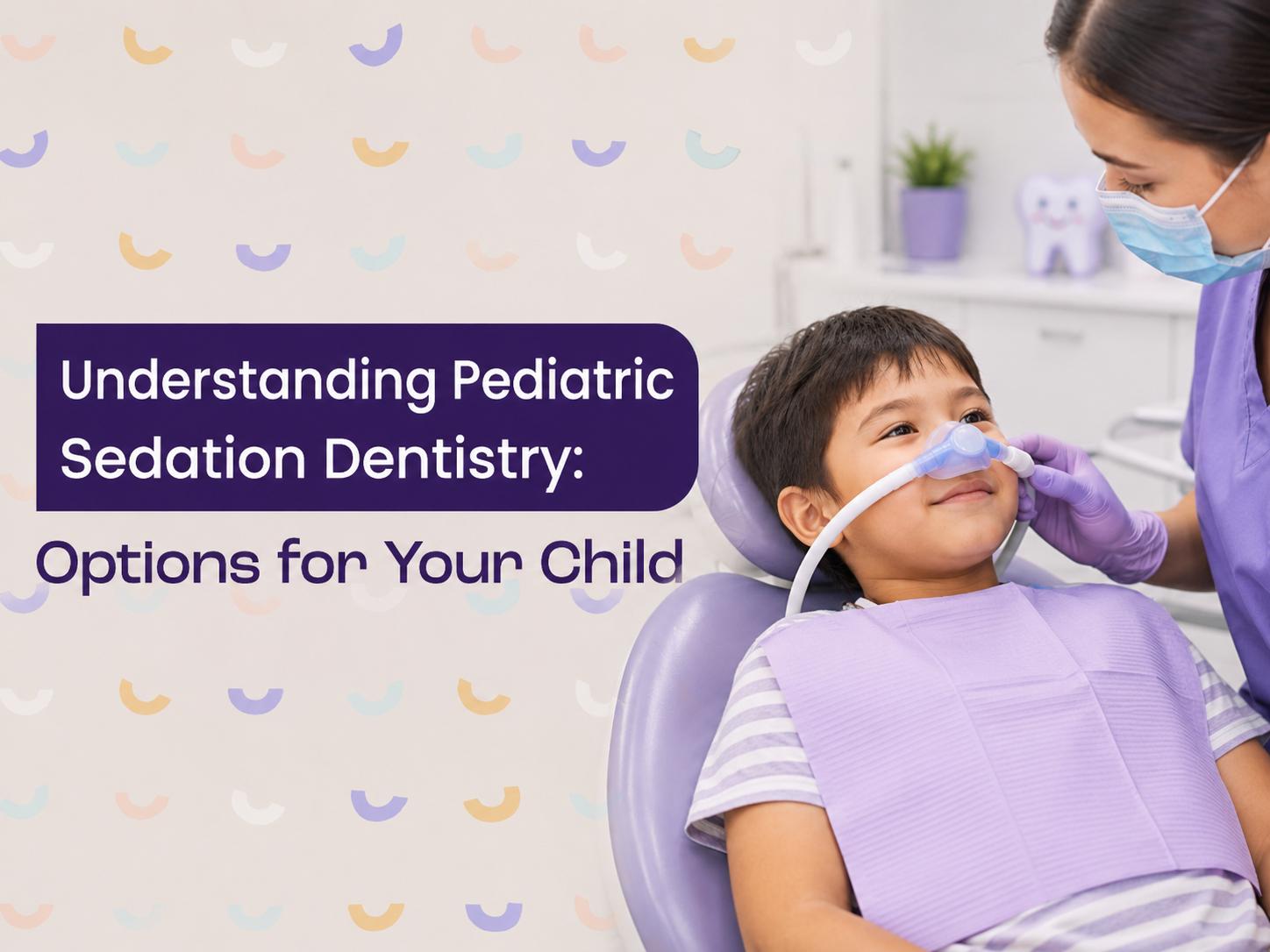
Parents experience natural hesitation which arises when they hear the word “sedation” in medical settings. While modern dentistry has evolved to prioritize patient comfort, the primary goal of pediatric sedation dentistry is to ensure that essential dental work can be completed safely and effectively for children who may be fearful or have extensive treatment needs.
Whether your child has a heightened gag reflex, a history of dental anxiety, or requires a complex restorative procedure, sedation offers a controlled and medically supervised way to manage their experience.
This guide will help you understand the entire process while explaining all available sedation levels and providing answers to safety questions which parents commonly ask. Understanding the strict protocols which need to be followed will help you choose an option which benefits your child’s dental health and emotional health.
Sedation used in pediatric dental procedures needs to be defined as a specific medical method which helps dentists to calm their young patients during dental operations. It is important to distinguish this from general anesthesia, as most forms of sedation used in the office allow the child to remain conscious or semi-conscious.
The core objective of children’s sedation dentistry is to create a positive association with the dentist. When a child experiences extreme anxiety they will start to move their body because they want to escape their situation which creates danger for the dentist who needs to perform exact work.
Consequently, the dentist uses sedation to create a continuous working space which protects the child from experiencing the dental clinic's sounds and pressure.
Sedation requires different levels which start from minimal sedation and progress to full sedation because of the different needs which each child presents.
Clinicians do not suggest sedation for every visit; rather, it is a tool used strategically for specific clinical or behavioral scenarios.
There are several reasons why a specialist might suggest pediatric sedation dentistry for your child:
There is no “one-size-fits-all” approach to sedation. At &Smiles Pediatric Dentistry, each method is chosen based on the child’s age, weight, and health history to ensure a personalized safety profile.
Nitrous oxide is the mildest form of dental sedation for kids. It consists of oxygen and nitrous oxide which is inhaled through a small mask.
This involves a liquid medication taken by mouth before the procedure begins. This method proves effective for children who experience moderate anxiety.
The fundamental requirement for pediatric sedation dentistry begins with safety. The medical team performs a complete medical examination of the child which includes all known allergies and current drugs before they proceed with any sedative treatment. This ensures the sedation dentist for children in Dallas can tailor the experience to your child’s physiology.
The successful execution of the procedure requires parents to complete designated tasks which need to be accomplished before the operation.
Ultimately, the decision to use pediatric sedation dentistry is based on providing the highest quality of care in the most comfortable environment possible. By choosing a qualified provider, you ensure that your child’s safety remains the top priority while addressing their essential dental needs. Sedation serves as an essential resource for contemporary dental procedures through its application of both light nitrous oxide and deeper relaxation techniques. Consequently, these methods establish trust which lasts throughout a person’s life and leads to continuous oral health maintenance.
As Bishop Arts’ exclusive board-certified experts, &Smiles Pediatric Dentistry specializes in gentle, minimally invasive techniques. We prioritize “no-drill” solutions and positive behavior management to eliminate dental anxiety. Our mission is to provide Dallas families with sophisticated, stress-free care that builds lasting confidence and ensures every child enjoys a healthy smile.


.png)
.png)
.webp)


.svg)


