The unsettling sound of a baby grinding teeth during sleep creates a sudden shock to any parent who hears it. This habit, clinically known as bruxism, is remarkably common in developing children but often sparks immediate concerns about enamel damage. The assessment of harmless developmental progress versus clinical treatment needs should be conducted for the sake of preserving oral health throughout time.
This guide explores the biological mechanisms that cause nighttime grinding and their associated side effects. Understanding of these factors enables effective management of this common occurrence. Proper monitoring ensures that the transition to permanent teeth remains protected and healthy. Staying informed is the first step toward maintaining a functional and confident smile for years to come.
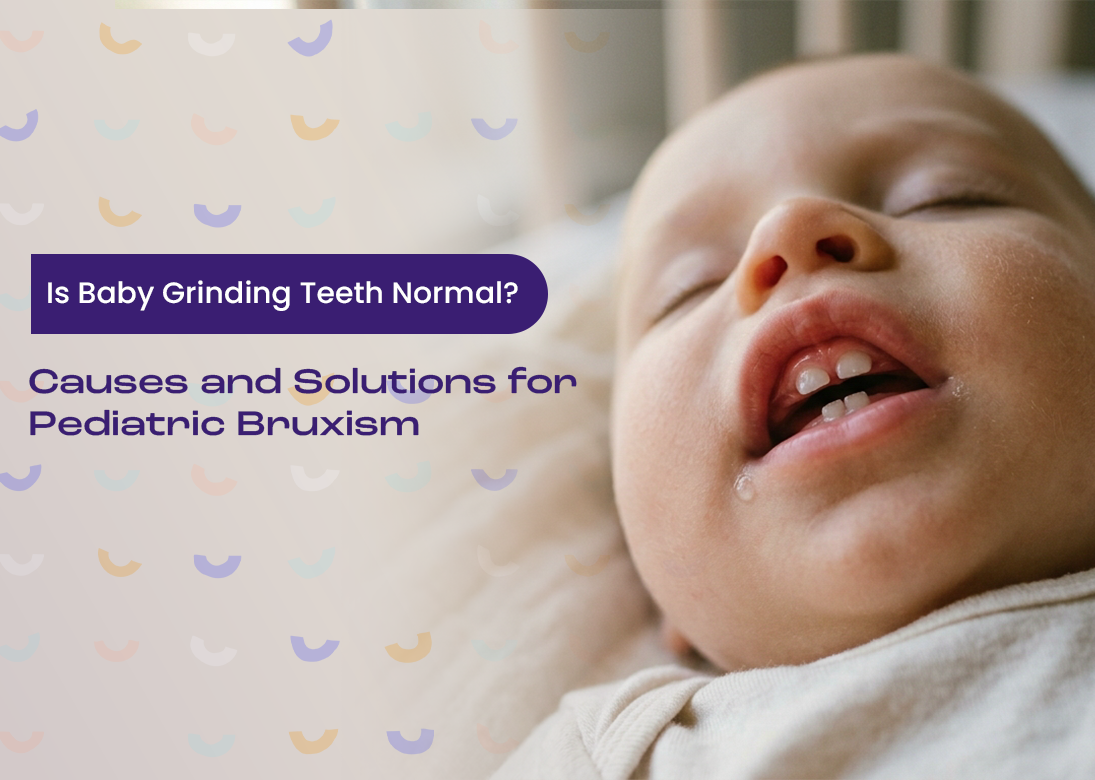
Recognizing the early indicators of teeth grinding in children allows for proactive monitoring before significant enamel wear occurs.
The most visible indicator of bruxism occurs when teeth create an audible sound through their contact which produces a sound that resembles “rocks clicking” or a “gritting” noise. Beyond the sound, you may notice:
During a routine checkup at &Smiles Pediatric Dentistry, our board-certified specialists look for specific clinical markers. These include flattened “wear facets” on the biting surfaces of the teeth or small chips in the enamel that cannot be explained by dietary habits or trauma.
Determining what causes bruxism involves looking at a variety of factors, ranging from physical development to psychological stress.
The most common cause is simply the emergence of new teeth. The child’s bite constantly changes as primary teeth fall out and permanent teeth begin to emerge. Consequently, children may grind their teeth as a subconscious way to find a comfortable position for their jaw.
Clinical research shows a strong connection between baby teeth grinding and reduced airway capacity. If a child has enlarged tonsils or adenoids, they may subconsciously shift their jaw forward to open their airway during sleep, resulting in grinding. Persistent grinding that causes significant tooth pain, damage, or other urgent symptoms may also require evaluation through pediatric emergency dentistry.
While most children outgrow bruxism by their pre-teen years, certain “red flags” indicate that the habit is no longer a harmless phase.
If the baby grinding teeth habit continues into the transition between primary and permanent teeth, the risk of permanent damage increases. Excessive force can lead to:
Just like adults, children can carry the stress of their day into their sleep. Changes in routine, school-related anxiety, or even a new sibling can trigger a spike in teeth grinding.
Parents often ask how to stop grinding teeth at home. While you cannot always stop the subconscious habit entirely, you can mitigate the environmental factors that contribute to it.
At &Smiles Pediatric Dentistry, we provide non-invasive treatments which safeguard your child’s dental health. We will suggest the following options if there is substantial wearing of your teeth:
Regular visits are the most effective way to manage a baby grinding teeth habit. Because the jaw grows so rapidly, a “wait and see” approach is only safe when a professional is tracking the enamel thickness over time.
Your child’s functional oral health is the main focus of the examination. As part of a broader preventive dentistry approach, the dentist will:
Ultimately, while the sound of your baby grinding teeth can be distressing, it is usually a temporary phase. By maintaining regular clinical checkups and practicing good sleep hygiene, you can ensure this habit does not lead to complications. Monitoring your child’s development through consistent observations will enable you to safeguard their dental health throughout their growing years. Your proactive approach will help you control bruxism before it begins to harm your kid’s functional health.
As Bishop Arts’ only board-certified specialists, &Smiles Pediatric Dentistry champions minimally invasive, “no-drill” care. Our child-centered approach combines advanced behavior management with a gentle philosophy, transforming routine visits into positive, trust-building experiences for every Dallas family seeking stress-free dental excellence.