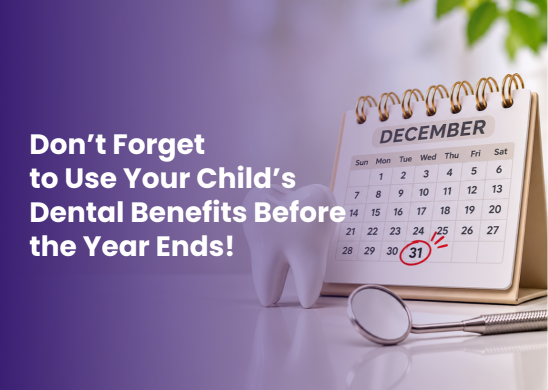
Between school activities, holiday shopping, and family plans, your child's dental insurance probably isn't at the top of your to-do list. But before December 31 arrives, there's one question worth asking: Does your child have dental benefits that could go unused?
Many dental insurance plans reset on January 1. When they do, unused annual benefits may expire, and deductibles may start over.
That doesn't mean you need to rush into treatment. It means now is a good time to review your coverage, check whether your child needs dental care, and understand what your insurance may contribute.
For Dallas families with PPO dental insurance, knowing how your plan handles network coverage and reimbursement is just as important as knowing when benefits expire.
Unused dental benefits often expire when the insurance plan's benefit year ends, but not every plan resets on December 31.
Some policies follow the calendar year, while others renew on a different date. Certain plans may also allow limited unused benefits to roll over.
Two terms can help you understand what might change:
Annual Maximum: The most your insurance company may pay toward covered dental services during a benefit year.
Deductible: The amount you may need to pay before insurance starts contributing toward certain treatments.
For example, suppose your child's plan has a $1,500 annual maximum, and the insurer has already paid $900. Up to $600 may remain available for eligible services.
That remaining amount isn't guaranteed savings. Your insurer may apply coverage percentages, procedure limits, deductibles, and other restrictions.
Some plans also treat preventive services differently when calculating annual maximums.
The American Dental Association's explanation of dental plan limitations provides more detail about how these rules work.
One of the simplest ways to review your remaining benefits is to check when your child last visited the dentist.
Depending on your insurance plan, preventive benefits may apply to:
However, insurance coverage doesn't determine how often your child should receive dental care.
The American Academy of Pediatric Dentistry recommends preventive visits based on each child's oral health needs and risk factors, with six-month examinations commonly recommended.
At &Smiles Pediatric Dentistry, our preventive dental services for children focus on protecting developing smiles through regular examinations, preventive treatments, and age-appropriate oral hygiene guidance.
Before scheduling, check your child's previous appointment dates and confirm whether another visit is covered under your plan.
Imagine your child recently had a cavity diagnosed, and the dentist recommended a filling. With holidays approaching, you might wonder whether treatment can wait until January.
The answer depends on your child's dental condition.
Some cavities can grow without noticeable pain. When decay progresses, a tooth that initially needed a filling may require more extensive treatment.
Our pediatric restorative dentistry services include fillings, dental crowns, and other procedures that help repair damaged teeth and maintain healthy function.
Before deciding when to schedule treatment, ask your pediatric dentist:
Your child's dental needs should always come first. Year-end insurance benefits may influence financial planning, but they shouldn't be the reason to delay necessary care or receive treatment that isn't needed.
Understanding your PPO benefits can make planning dental care less stressful, especially if you're visiting a dentist outside your insurance network.
At &Smiles Pediatric Dentistry, we accommodate most PPO dental insurance plans and submit dental claims on behalf of families after appointments.
Here's an important distinction.
If we don't have a direct contract with your insurance plan, upfront payment is required. Your insurance company may then reimburse you directly according to your individual policy.
Suppose your child needs a filling, and your PPO plan includes out-of-network benefits.
You would pay the office according to the applicable payment arrangement. After the claim is submitted, your insurer reviews the treatment and determines whether reimbursement is available.
The reimbursement amount may depend on:
For example, an insurance company may calculate reimbursement using its allowed amount rather than the dentist's full fee. This means your reimbursement may be lower than expected.
Neither an insurance estimate nor claim submission guarantees payment.
You can read our insurance and payment FAQs to understand how &Smiles accommodates PPO plans and handles claims.
You don't need to be an insurance expert to understand your child's coverage. These five steps can help you get the information you need.
Check your policy documents or contact your insurer. Ask whether your benefits reset on January 1 or follow a different schedule.
Use your insurance provider's online portal to review the remaining annual maximum, deductible, and previously processed claims.
Find out whether your child is eligible for another examination, cleaning, or other preventive treatment. Some plans have frequency limits that don't align exactly with the calendar year.
If your child needs a filling, crown, or another procedure, ask for a treatment estimate. You can also ask whether your insurer offers a predetermination of benefits, which provides an estimate of potential coverage before treatment.
Remember that a predetermination isn't a guarantee of payment.
Before visiting &Smiles, confirm whether your plan is directly contracted with our office. If it isn't, ask about upfront payment and the process for receiving any reimbursement from your insurer.
These steps can help you understand what insurance may cover and what your family may need to pay.
Dental insurance isn't the only way to plan for your child's dental care.
For families without coverage, &Smiles Pediatric Dentistry offers Membership&Smiles, an annual in-house membership program.
According to our published membership information, the program includes:
Membership&Smiles isn't dental insurance, and its benefits follow the program's own terms.
Families can review the practice's membership and payment information or contact our team to confirm current fees and included services.
At &Smiles Pediatric Dentistry in Dallas' Bishop Arts neighborhood, Dr. Anthony Ngo and Dr. Mikael Garces are board-certified pediatric dentists who provide personalized care for infants, children, and adolescents.
Both completed their dental education at Baylor College of Dentistry and advanced pediatric dental residency training that included Children's Medical Center Dallas. Their specialized training helps them understand children's developing teeth, behavior, and individual treatment needs.
You can learn more about their backgrounds and approach to pediatric dentistry on our Meet Our Doctors page.
Our team believes dental visits should feel comfortable for children and straightforward for parents. Whether you're planning a routine cleaning or discussing treatment and PPO insurance benefits, we're here to help you understand your options.
Before your child's benefit year ends, check your remaining coverage and any recommended dental care. If it's time for a visit, contact &Smiles Pediatric Dentistry to discuss payment arrangements and schedule an appointment.
A little preparation now can help you make informed decisions about your child's dental health without unnecessary year-end pressure.